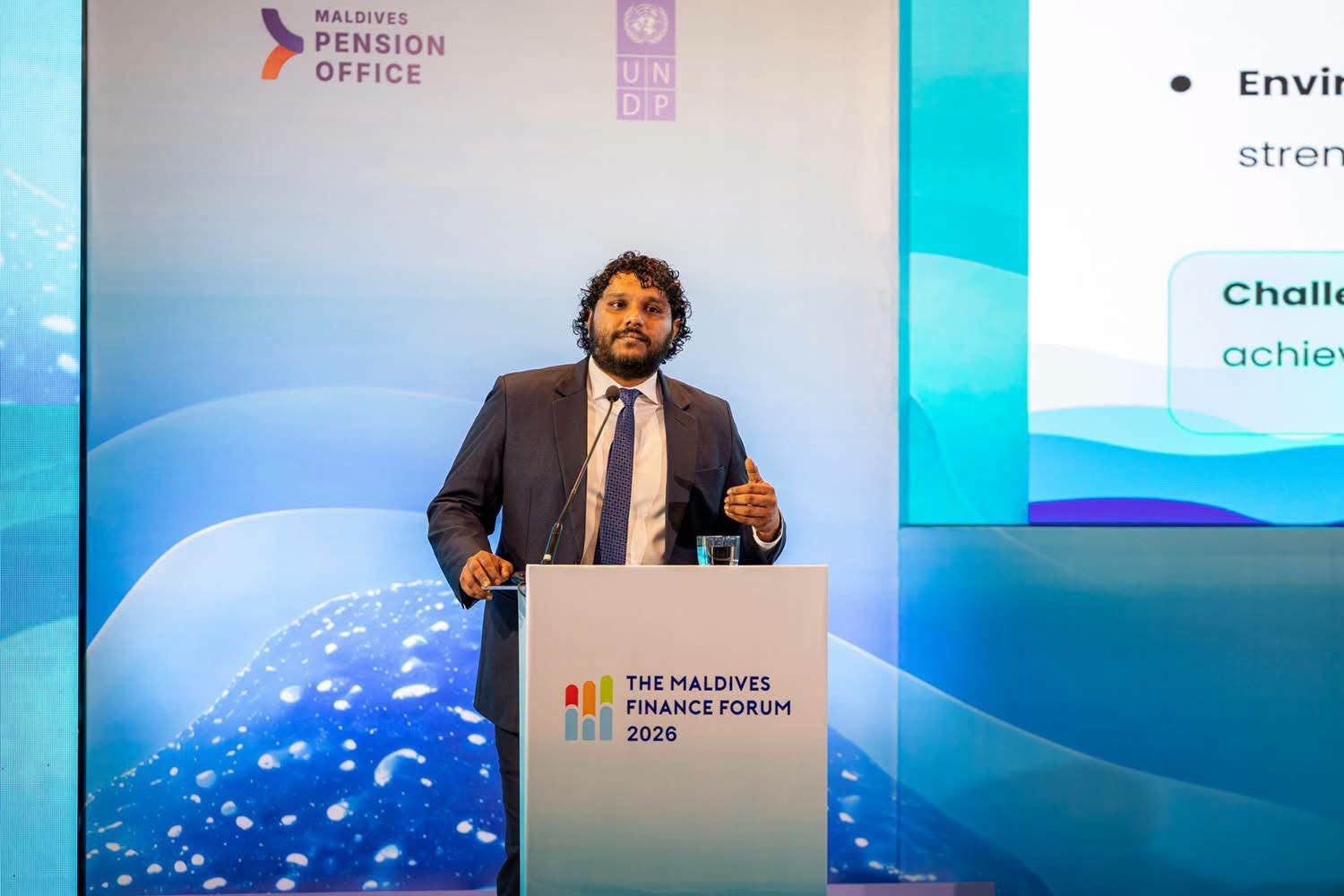

The Maldives is strengthening its approach to fiscal management and medium-term economic planning as climate change continues to place growing pressure on public finances, businesses and the wider economy, Deputy Minister of Finance and Public Enterprises Ahmed Saaid Musthafa has said.
Saaid said that despite the implementation of several robust fiscal policies by the Government, the Maldives remains highly exposed to environmental and climate-related risks due to its geographical characteristics and dependence on climate-sensitive sectors. He noted that environmental vulnerability is one of the important factors considered by international rating agencies when assessing the country’s economic resilience, fiscal sustainability and broader financial outlook.
According to Saaid, climate-related risks are also consistently raised during consultations with major international financial institutions, including the International Monetary Fund, World Bank and Asian Development Bank, as well as international credit rating agencies such as Fitch Ratings and Moody’s. These discussions increasingly reflect the importance of incorporating environmental pressures into long-term economic and fiscal decision-making.
He stressed that preparing a sustainable State budget requires a broader assessment of the country’s medium-term economic requirements rather than focusing only on revenue growth. Sound policies designed to improve expenditure efficiency and manage public spending responsibly are equally important in strengthening the fiscal position, he said.
Tourism remains the Maldives’ principal economic sector, and the Government continues to work towards increasing visitor arrivals and strengthening revenue generation from the industry. Saaid noted, however, that continued economic expansion must also account for the additional pressure placed on the environment, public utilities and national infrastructure. Such costs need to be considered carefully when developing fiscal policies and planning future investments.
Environmental changes are already influencing expenditure patterns in the country. Saaid said coastal erosion and rising temperatures are among the factors contributing to increasing energy consumption and oil demand. As an island nation with communities, businesses, resorts and public services spread across geographically dispersed islands, energy and transport requirements remain significant components of national expenditure.
The Maldives currently spends approximately nine to 10 per cent of its Gross Domestic Product on oil imports, while government expenditure on subsidies represents a similarly substantial fiscal commitment. Subsidy expenditure is projected to reach USD 908 million this year, while USD 901.4 million has been allocated for subsidies in next year’s State budget.
Saaid highlighted that the Maldives recorded its highest annual oil import expenditure in 2022, when spending reached USD 830.99 million. However, expenditure on oil imports had already exceeded that level by the end of September this year, demonstrating the growing financial impact of energy demand on the economy.
Higher oil expenditure has wider economic implications, including contributing to inflationary pressures and increasing demand for foreign currency, particularly US dollars. Reducing these vulnerabilities while improving expenditure efficiency therefore remains an important component of the Government’s broader fiscal and economic strategy.
Referring to next year’s State budget, which was recently submitted to Parliament, Saaid said the Government is expected to require USD 1.23 billion in financing to meet its financial requirements. The amount is equivalent to 14.6 per cent of projected GDP for next year, compared with approximately 20 per cent of GDP this year.
The reduction in financing requirements as a share of GDP reflects the Government’s continuing efforts to strengthen fiscal management while addressing the unique economic challenges faced by a climate-vulnerable island nation. With tourism growth, infrastructure development and fiscal reforms continuing simultaneously, authorities are placing increasing emphasis on ensuring that economic expansion remains financially sustainable and responsive to the environmental realities facing the Maldives.
 advertisment



 advertisment