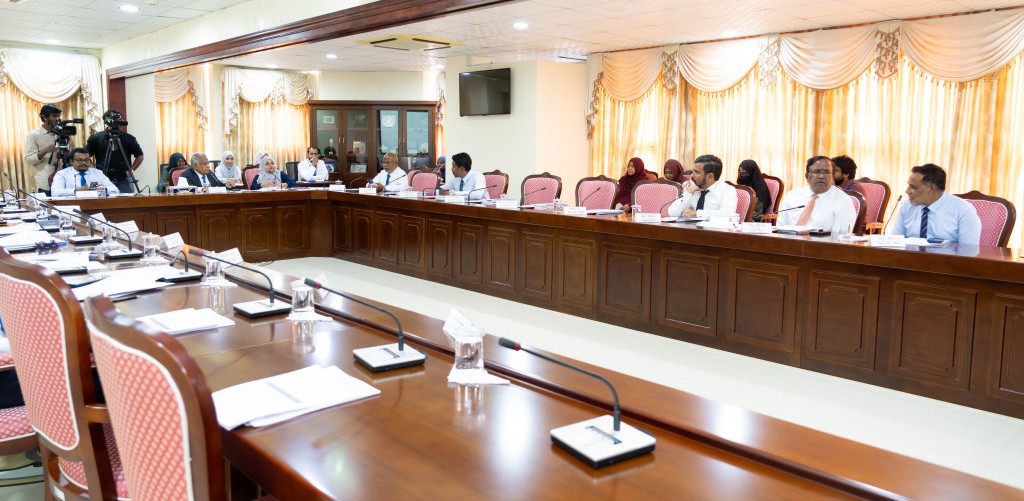

The Maldives Monetary Authority has called on the Government to maintain firm control over recurrent expenditure and accelerate fiscal reforms as the country prepares to implement a USD 3.87 billion state budget for 2027.
In its recommendations on the proposed budget, the central bank highlighted the importance of strengthening revenue collection, improving expenditure efficiency and maintaining macroeconomic stability. The 2027 budget projects a deficit of USD 609.6 million, equivalent to around 7 per cent of GDP, while the Government continues to pursue a medium-term objective of reducing the overall fiscal deficit to 5 per cent of GDP by the end of 2028.
The MMA noted that recurrent expenditure growth should remain below the rate of revenue growth in accordance with the Public Finance Act. It encouraged the Government to continue implementing expenditure reforms while accelerating sustainable revenue measures that can strengthen the country’s fiscal position over the medium term.
With no new revenue-generating measures planned for 2027, the authority recommended faster implementation of existing policies and legislative reforms aimed at improving revenue administration. It identified further potential to increase Corporate Income Tax revenue from the tourism sector, which remains the strongest contributor to the Maldivian economy and a key source of foreign exchange, employment and investment.
The central bank also recommended placing the revenue administration mandate of Maldives Customs Service under the oversight of the Ministry of Finance, particularly as outstanding revenue owed to Customs continues to require greater attention. It further called for stronger coordination among government institutions to secure the projected USD 50 million expected from lease period extension fees and other related charges.
While tourism continues to demonstrate its importance as the backbone of the economy, the MMA stressed the value of further economic diversification to strengthen national resilience. The authority also advised the Government to maintain a comprehensive contingency framework to respond to any external developments, including potential disruptions arising from conflict in the Middle East that could affect international travel and tourism demand.
On expenditure management, the MMA recommended progressing from blanket subsidies towards a more targeted system that directs government assistance to those who need it most. It also supported planned reforms to healthcare expenditure under the Aasandha scheme, including the introduction of a co-payment system from January 2027 and wider use of bulk procurement to improve efficiency and reduce the Government’s financial burden.
For Public Sector Investment Programme projects, the authority advised prioritising ongoing developments and ensuring that projects already under implementation continue without unnecessary disruption. New projects and awarded projects that have not yet commenced should be prioritised according to available financing, while greater emphasis should be placed on securing concessional and green financing for infrastructure development.
The MMA additionally recommended reducing reliance on commercial banks for government securities when raising funds domestically, citing the importance of protecting medium-term financial stability. The central bank encouraged advance planning to secure expected external financing and reduce pressure on the domestic financial system.
Foreign currency management was also highlighted as an important component of the country’s fiscal strategy. The MMA called for prudent control of foreign currency expenditure to maintain official reserves at adequate levels and stressed that foreign currency contributions allocated to the Sovereign Development Fund should be deposited in accordance with established regulations.
According to the authority, maintaining sufficient resources in the Sovereign Development Fund to meet external debt obligations will remain important for strengthening confidence in the economy, supporting exchange-rate stability and protecting the value of the Maldivian rufiyaa.
The recommendations provide a broad framework for strengthening fiscal sustainability as the Government moves into 2027, with greater emphasis on efficient spending, stronger revenue administration, responsible financing and continued efforts to protect the Maldives from external economic shocks while supporting long-term development.
 advertisment





 advertisment