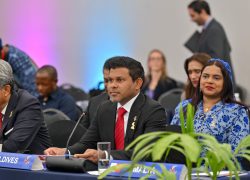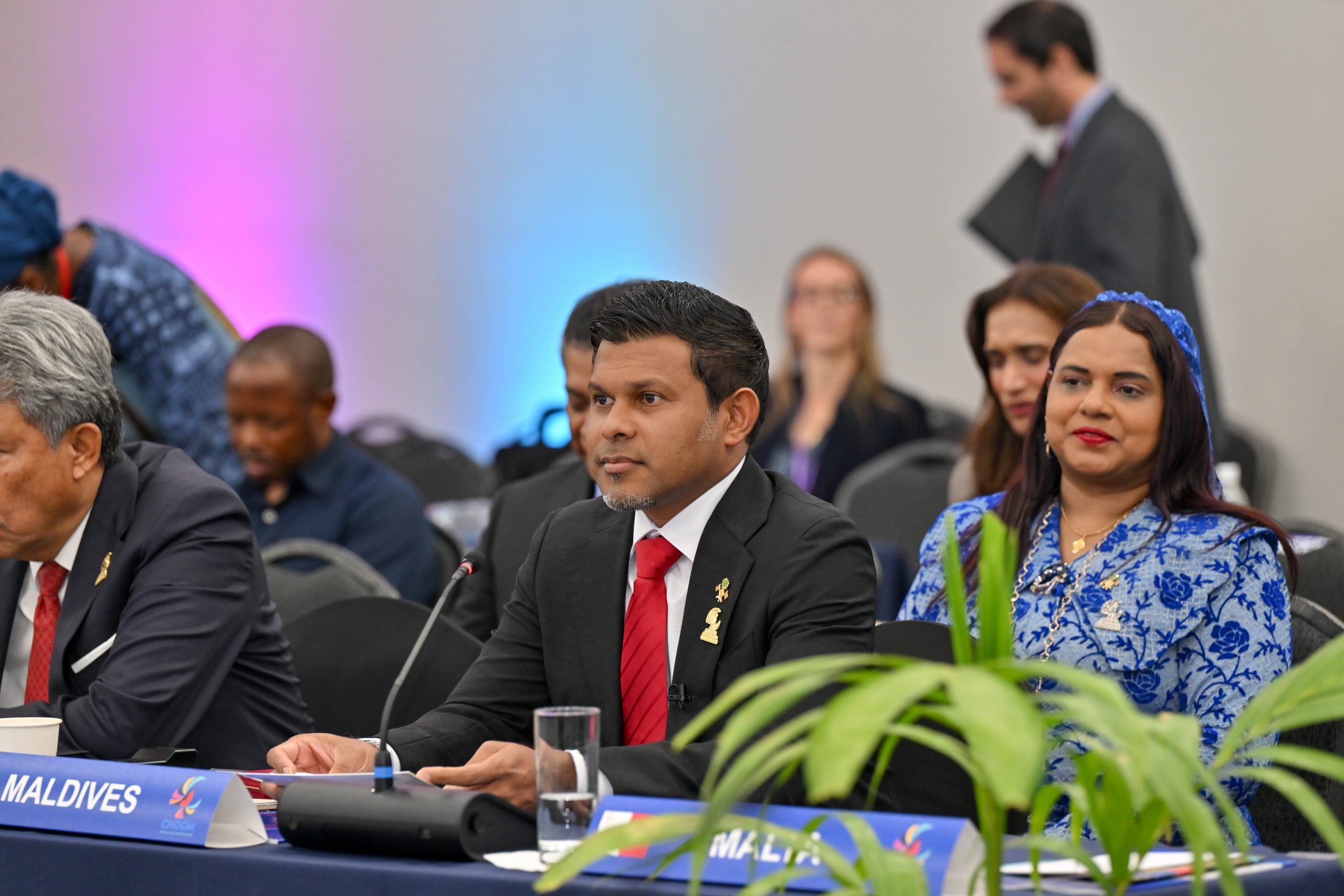

Vice President Uz Hussain Mohamed Latheef has called for stronger and more resilient partnerships across the Commonwealth, outlining three priorities that he said could help member states build lasting capacity, strengthen national resilience and respond more effectively to shared global challenges.
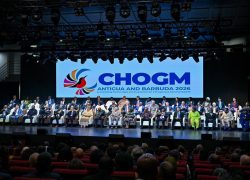
Addressing Executive Session II of the Commonwealth Heads of Government Meeting (CHOGM) in St John’s, Antigua and Barbuda, the Vice President identified strengthening institutional capacity and empowering people to lead, respecting national objectives while fostering self-reliance, and transforming common challenges into collective action as the three key priorities for deeper Commonwealth cooperation.
The Vice President stressed that international partnerships should go beyond responding to immediate needs and instead help countries establish strong institutions, develop capable workforces and create systems that can support long-term national progress. He emphasised that effective cooperation must also respect the priorities and development objectives of individual member states, allowing each country to determine its own path while benefiting from the experience and support of the wider Commonwealth family.
He also called for greater collaboration through the sharing of expertise, practical assistance and jointly developed solutions, particularly in areas where Commonwealth countries face similar pressures. These include climate resilience, technological advancement, digital transformation and broader economic challenges that increasingly require coordinated international responses.
Highlighting the importance of national ownership, the Vice President said a stronger Commonwealth is one that enables every member country to build on its own strengths. His remarks reflected the Maldives’ broader approach to development under the administration of President Dr Mohamed Muizzu, with the Government placing strong emphasis on economic resilience, technological advancement, renewable energy and investment in human capital.
The Vice President reaffirmed the Maldives’ national ambition to become a developed country by 2040 and highlighted several major targets being pursued under the Government’s development agenda. These include building a digital economy that contributes 15 per cent of the country’s gross domestic product by 2030 and increasing renewable energy generation to account for 33 per cent of national energy needs by 2028.
He described these objectives as important elements of President Dr Mohamed Muizzu’s vision for a more resilient, competitive and future-ready Maldives. The Government has continued to place digitalisation at the centre of public sector modernisation and economic development, while also pursuing renewable energy initiatives aimed at reducing dependence on imported fuel, strengthening energy security and improving the country’s ability to withstand external economic pressures.
The Vice President placed particular emphasis on the role of young people in achieving the Maldives’ long-term development objectives, describing them as both the driving force behind national progress and the principal beneficiaries of future development. He said investments in skills, education, knowledge and opportunities for young people would directly contribute to building the country envisioned under the Government’s development agenda.
He also drew attention to the continuing impact of external pressures on developing and vulnerable economies, including disruptions to global supply chains and wider economic uncertainty. Such challenges, he noted, can limit the ability of countries to invest adequately in infrastructure, human development and other long-term national priorities.
Against this backdrop, the Vice President underscored the importance of the Commonwealth as a platform for meaningful partnership and practical cooperation, particularly in helping member countries strengthen their resilience and expand their capacity to achieve national goals.
 advertisment



 advertisment