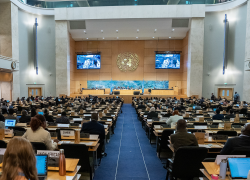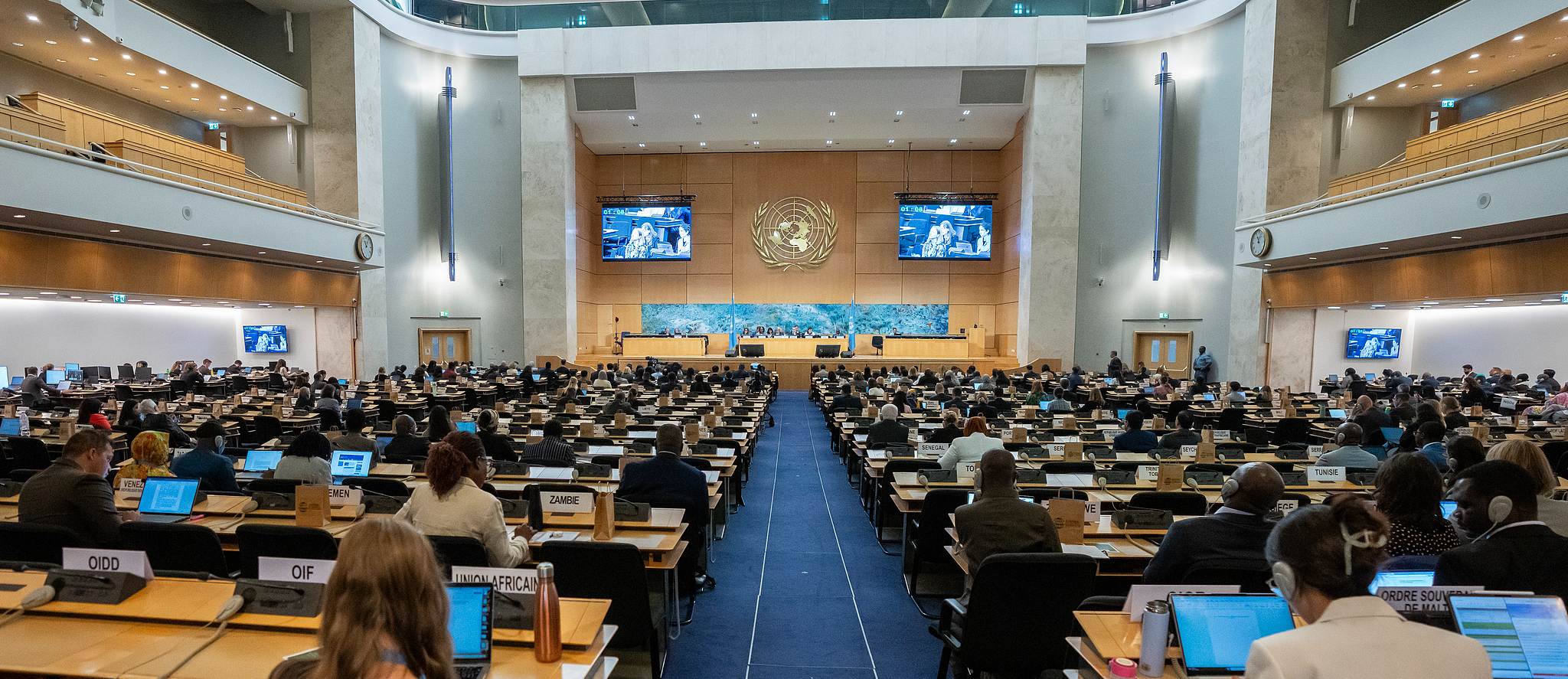

The Maldives has reinforced its growing role in international human rights and climate diplomacy during the 63rd session of the United Nations Human Rights Council in Geneva, where the Council concluded its proceedings after adopting 34 resolutions, two decisions and a President’s statement covering a wide range of thematic and country-specific human rights issues.
Represented by Ambassador Dr. Salma Rasheed and a four-member diplomatic delegation, the Maldives maintained an active presence throughout the two-week session, delivering national statements on key international issues and contributing to discussions reflecting the country’s priorities in human rights, sustainable development, climate resilience and social protection.
The Maldives co-sponsored several resolutions addressing areas of direct relevance to communities around the world, including youth and human rights, children’s access to nutritious food, safe drinking water and sanitation, good governance, and universal accessibility to human rights. The delegation also participated in collective statements delivered through the Organisation of Islamic Cooperation and the Non-Aligned Movement, as well as statements led by individual member states on issues aligned with Maldivian priorities.
Speaking on behalf of the informal Small Island Developing States group, Ambassador Salma highlighted the importance of mobilising adequate climate finance and called for swift and predictable funding to ensure that climate action translates into the full realisation of human rights. The intervention reflected the Maldives’ continued efforts to bring the unique vulnerabilities of small island nations to the forefront of international decision-making, particularly as climate change, coastal erosion and sea-level rise increasingly affect communities, infrastructure and long-term national development.
The Maldives also reaffirmed its longstanding support for the Palestinian people, emphasising the right to self-determination, the protection of civilians, unhindered humanitarian access and the importance of achieving a durable peace based on international law.
Alongside Costa Rica, Morocco, Slovenia and UN Special Rapporteur Astrid Puentes Riano, the Maldives co-hosted a high-level side event titled “A Celebration and Stock-taking: Five Years Since the Recognition of the Human Right to a Clean, Healthy and Sustainable Environment.” The event marked five years since the adoption of UN Human Rights Council Resolution 48/13 and reviewed progress made in strengthening international recognition of environmental protection as a fundamental human rights concern.
Discussions at the event also reflected on significant international developments, including the International Court of Justice’s 2025 advisory opinion on climate change, while participants considered priorities for advancing the right to a clean, healthy and sustainable environment over the next five years.
As a member of the Core Group on Sea-Level Rise, the Maldives also contributed to organising the event “Protecting People from Sea Level Rise: A Human Rights Agenda for Liveable, Inclusive and Resilient Cities.” Ambassador Salma shared the Maldives’ practical experience in integrated coastal protection, early-warning systems and inclusive local climate action, while stressing the importance of stronger international cooperation for Small Island Developing States facing some of the most immediate consequences of climate change.
The Maldivian delegation was led by Ambassador Dr. Salma Rasheed and included Counsellor Adam Hamid, Counsellor Aminath Shifaya Ibrahim, Second Secretary Aishath Rayahyn and Attaché Raaidh Saeedh.
Through its participation in the session, the Maldives continued to demonstrate the Government’s commitment to using multilateral platforms to advance climate resilience, social equity, sustainable development and justice, while ensuring that the concerns and experiences of vulnerable island nations remain firmly represented within the global human rights agenda.
 advertisment


 advertisment