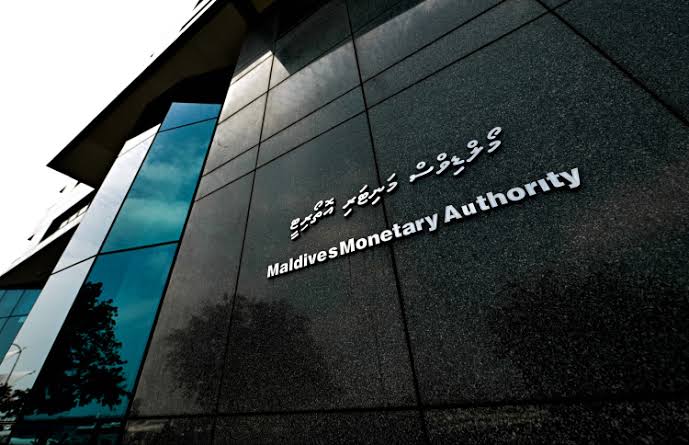

The Maldives Monetary Authority (MMA) has absorbed MVR 3 billion (USD 194.55 million) in excess liquidity from the domestic financial system over the past year, reflecting intensified monetary policy efforts to reduce surplus Rufiyaa, ease pressure on the foreign exchange market and strengthen long-term macroeconomic stability in the Maldives.
Speaking at a press conference held at the President’s Office, MMA Governor Ahmed Munawwar said the central bank is expanding its monetary policy measures as part of a broader programme to strengthen financial stability and improve liquidity management. The measures are intended to reduce excess Rufiyaa circulating within the banking system while supporting greater stability in the foreign exchange market.
The MMA reintroduced Open Market Operations (OMO) on 23 July 2025 after approximately a decade without the instrument being actively used. The decision enabled the central bank to directly manage surplus liquidity in the financial system by absorbing excess funds from commercial banks. According to Governor Munawwar, excess liquidity stood at approximately MVR 8 billion (USD 518.81 million) when he assumed office, prompting the MMA to strengthen its efforts to systematically withdraw surplus Rufiyaa from the market.
As part of the next phase of the policy, the MMA has decided to increase yields offered through its Open Market Operations by 10 basis points. The adjustment is expected to strengthen participation in the liquidity-absorption mechanism and support the central bank’s objective of reducing excess funds circulating within the financial system.
The MMA is also tightening the Minimum Reserve Requirement (MRR) applicable to commercial banks. From September 2026, the reserve requirement will increase from 10.5 percent to 11 percent, meaning commercial banks will be required to maintain a larger proportion of their deposits with the central bank. The MMA plans to review the requirement every three months, with the rate expected to gradually increase to 13 percent by the end of 2027.
The strengthened monetary policy measures form part of the Government and MMA’s wider efforts to address structural pressures that accumulated within the economy following the COVID-19 pandemic. During the pandemic period under the previous administration, the Fiscal Responsibility Act was suspended and monetary financing amounting to MVR 8.2 billion (USD 531.78 million) was undertaken to meet government financing requirements during the exceptional economic circumstances.
According to MMA statistics, the monetary expansion contributed to a 178 percent increase in the circulating supply of Rufiyaa. The financing was subsequently converted into long-term government bonds on three occasions. The resulting expansion of domestic liquidity contributed to stronger demand for foreign currency, increasing pressure on the foreign exchange market and the value of the Maldivian Rufiyaa.
The current administration has placed greater emphasis on fiscal consolidation, foreign exchange reform and strengthening monetary discipline as part of its broader economic management strategy. The MMA’s decision to absorb excess liquidity complements these efforts by addressing one of the underlying monetary factors contributing to elevated foreign currency demand.
Reducing excess liquidity is particularly important for the Maldives due to the economy’s high dependence on imports and foreign currency transactions. When substantial volumes of surplus Rufiyaa circulate within the financial system, demand for US dollars and other foreign currencies can increase. By gradually withdrawing surplus liquidity and strengthening reserve requirements, the MMA aims to improve monetary conditions while supporting a more sustainable balance between domestic currency availability and foreign exchange demand.
The absorption of MVR 3 billion within a year represents significant progress towards reducing the MVR 8 billion liquidity surplus identified when the current Governor assumed office. Continued implementation of OMOs, combined with the planned increase in commercial bank reserve requirements, is expected to further strengthen the MMA’s ability to manage money supply and respond effectively to changing economic conditions.
The measures also support the Government’s broader objective of creating a more resilient financial environment capable of sustaining investment, business activity and economic growth. Greater stability in the monetary and foreign exchange system is particularly important for businesses operating in tourism, trade, construction and other import-dependent sectors, where predictable access to foreign currency remains a key component of operational planning and investment confidence.
The MMA has reiterated its commitment to pursuing structural monetary policy reforms aimed at strengthening systemic liquidity management, safeguarding currency stability and supporting sustainable economic growth. With excess liquidity continuing to be progressively withdrawn and monetary policy instruments being strengthened, the central bank’s latest measures reinforce ongoing efforts by the Government and financial authorities to place the Maldivian economy on a more stable and disciplined long-term footing.
 advertisment




 advertisment