
The Maldives and India are expected to conclude a Free Trade Agreement (FTA) by the end of 2026, as the Maldivian Government advances a broader economic strategy focused on expanding international trade, strengthening investment flows and creating new opportunities for local businesses and young entrepreneurs.
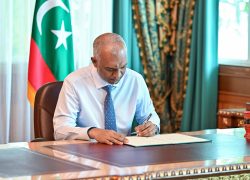
Minister of Economic Development, Transport and Trade Mohamed Saeed said the Government expects the proposed agreement with India to be established before the end of the year. He made the remarks during the “Iqthisaadhuge Dhefarai” forum organised by the Ministry of Economic Development, Transport and Trade. The Terms of Reference for negotiations on the agreement were signed in March 2026, providing the framework for discussions between the two countries.
Minister Saeed said the Government is implementing a series of initiatives aimed at creating greater economic opportunities for Maldivian youth while strengthening the country’s participation in the global digital economy. As part of these efforts, the Maldives has begun building connections with major international commercial platforms, allowing local businesses and entrepreneurs to gain greater exposure to overseas markets.
More than 400 Maldivian businesses have already been listed on international platforms such as Alibaba through the Government’s “Authentic Maldives” initiative. The programme is intended to provide Maldivian enterprises with new opportunities to promote locally produced goods, services and creative products internationally, supporting the Government’s efforts to diversify economic activity beyond traditional sectors.
Minister Saeed said one of the objectives of the bilateral investment treaty currently being negotiated with India is to improve opportunities for Maldivian youth and businesses to access the significantly larger Indian market. He highlighted India’s strong development in the information technology and entertainment industries, noting that these sectors could provide substantial opportunities for Maldivian software developers, application developers and other technology-focused entrepreneurs.
The growing digital economic relationship between the two countries is also being supported by the introduction of India’s Unified Payments Interface, or UPI, in the Maldives. The payment system is expected to improve convenience in cross-border transactions and strengthen the financial connectivity necessary to support expanding trade, tourism and commercial activity between the two markets.
Minister Saeed said the Government remains focused on ensuring that any future trade arrangement provides meaningful opportunities for Maldivian businesses while protecting the sustainability of the domestic market.
“We believe that by the end of this year, we will be able to enter into a Free Trade Agreement with India. As we integrate into their markets and they understand our markets, if we give them all the benefits they seek while giving them equal access to our market, our market could become saturated. That would not be sustainable. We are moving forward with that balance,” Saeed said.
The Minister also highlighted significant investment activity linked to the tourism sector, stating that projects valued at approximately USD 648 million are currently being undertaken for the development of various resorts under different agreements between the Maldives and India.
The scale of the resort development pipeline reflects the continued importance of tourism-related investment to the Maldives’ economic expansion. Resort developments represent substantial long-term capital commitments involving accommodation infrastructure, utilities, transport links, engineering, construction and operational facilities. As projects progress from development to operation, they also have the potential to generate business opportunities across construction, logistics, food supply, transportation, professional services and other supporting sectors of the economy.
New resort developments can further strengthen the Maldives’ tourism capacity by expanding the range of accommodation available across the archipelago and supporting the development of previously underutilised locations. Continued investment in the sector is also important for maintaining the Maldives’ international competitiveness as a premium tourism destination while attracting additional foreign investment into hospitality and related infrastructure.
The USD 648 million investment portfolio also demonstrates the growing role of bilateral economic cooperation in supporting the Maldives’ tourism development ambitions. Tourism remains closely connected with several other areas of the economy, meaning investments in new properties can create wider opportunities for Maldivian companies, workers and service providers throughout the development and operational phases of the projects.
The proposed Maldives-India FTA is intended to complement this expanding investment relationship by establishing a more comprehensive framework for bilateral economic cooperation. The agreement is expected to expand trade opportunities, reduce barriers affecting cross-border commerce and create a more favourable environment for businesses and investors operating between the two countries.
According to the Ministry, the agreement is also expected to increase cross-border trade and investment while providing greater convenience for Indian tourists visiting the Maldives and Maldivians residing or conducting business in India. Enhanced payment connectivity and commercial arrangements could make transactions for goods and services easier for individuals and businesses operating between the two countries.
India represents a major neighbouring economy and an important market for the Maldives, particularly in areas including tourism, trade, technology, investment and services. Greater access to the Indian market could provide Maldivian businesses with opportunities to reach a significantly larger consumer base, while an appropriately structured agreement could support the Government’s objective of protecting domestic commercial interests and ensuring that liberalisation delivers sustainable benefits to the Maldivian economy.
The Government has been steadily expanding the Maldives’ network of international trade arrangements as part of its economic development strategy. While negotiations with India continue, the Maldives-China Free Trade Agreement entered into force in January 2025, strengthening trade relations between the Maldives and one of the world’s largest economies.
The Maldives also brought its Preferential Trade Agreement with Türkiye into effect on 1 August 2026, further expanding opportunities for Maldivian businesses to access international markets under preferential trading arrangements.
Together, the agreements reflect the Government’s increasing focus on strengthening the Maldives’ international economic connectivity, diversifying commercial opportunities and creating new pathways for Maldivian businesses and entrepreneurs. The anticipated FTA with India, combined with expanding digital payment connectivity and the USD 648 million portfolio of resort developments, is expected to further deepen bilateral economic cooperation and support the Maldives’ long-term trade, investment and tourism development objectives.
 advertisment




 advertisment