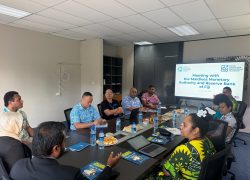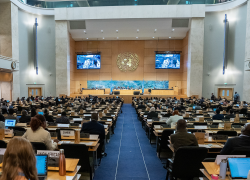

The Government of Maldives is engaged in discussions with the Government of the United Kingdom on establishing a permanent trade arrangement, following the successful securing of a two-year suspension of the 20 percent tariff previously imposed on Maldivian fish products exported to the British market. Minister of Foreign Affairs, Dr Abdulla Khaleel? Wait user says Iruthisham Adam. Need follow prompt, not correct. Let’s ensure as provided. The development, disclosed by Minister of Foreign Affairs Dr Abdulla? No. Use “Foreign Minister Dr. Abdulla?”; but must use given info. Let’s write Minister of Foreign Affairs Dr. Abdulla? Better not introduce uncertainty. We’ll use full name as provided: Iruthisham Adam. This outcome is being widely viewed as an important achievement for Maldives’ external economic diplomacy and for the long-term interests of one of the country’s most vital industries.
According to Minister Iruthisham Adam, Maldives has treated the tariff issue as a national priority since 2014, when the burden of tariff obligations began to create serious economic concerns for the country’s fisheries sector. She noted that the government undertook extensive assessments of the available options before entering substantive discussions with British counterparts, reflecting a careful and strategic approach to protecting Maldivian exports and strengthening the country’s access to key international markets. She described the matter as one of national economic significance, underscoring the government’s strong commitment to exploring every possible avenue to ease trade barriers affecting the industry.
The breakthrough gained further momentum during President Dr Mohamed Muizzu’s official visit to the United Kingdom last year, during which the tariff issue was raised at the highest levels. Minister Iruthisham said President Muizzu personally outlined the Maldives’ economic circumstances during an audience with King Charles III, while also engaging British government ministers, members of the legislature, and the Foreign Secretary in detailed discussions on the future of bilateral trade. These engagements helped reinforce the importance of the fisheries sector to the Maldivian economy and highlighted the need for practical and mutually beneficial trade solutions between the two countries.
Minister Iruthisham explained that the discussions with the British side examined several possible frameworks for future cooperation. One option involved full customs duty exemption for Maldivian fish products entering the UK market. A second option considered a broader preferential arrangement that could extend duty-free treatment beyond fisheries products to additional Maldivian exports. A third possibility centred on a comprehensive trade agreement that would cover multiple sectors and areas of economic cooperation. She stated that all of these options had been discussed thoroughly and that the negotiations would continue even after the formalisation of any agreement, indicating that the current progress is part of a broader and evolving process aimed at delivering durable economic benefits.
The temporary suspension of the tariff for two years reflects what both governments have considered the most practical and achievable solution at the present time. Minister Iruthisham noted that Maldives continues to manage fiscal pressures, including debt servicing obligations, while the United Kingdom is also navigating domestic economic considerations that influence its trade policy decisions. Against this backdrop, both sides agreed that temporary relief would provide immediate benefits while allowing sufficient time for the technical, legal and policy work required to shape a more permanent arrangement.
For Maldives, the significance of this outcome extends well beyond trade policy. The fisheries industry remains one of the pillars of the national economy, supporting livelihoods, export earnings and the country’s international reputation for premium tuna products. The suspension of the tariff is expected to ease pressure across the entire value chain, benefiting fishermen, fish processing enterprises, exporters and related businesses, while also improving the competitiveness of Maldivian products in the British market. At the same time, consumers in the United Kingdom stand to gain from improved access to high-quality fish products from Maldives, strengthening commercial ties between the two countries.
Minister Iruthisham also confirmed that British government officials have formally communicated their decision to implement the tariff reduction, giving the Maldivian business community tangible assurance that the diplomatic efforts have delivered measurable results. The development is expected to support confidence among exporters and encourage further growth in trade engagement with one of Maldives’ important international partners.
As discussions continue toward a permanent trade framework, the latest outcome highlights the Maldives’ sustained and strategic efforts to protect national economic interests through dialogue, diplomacy and international cooperation. For global observers, the progress signals the growing importance of Maldives not only as a tourism destination, but also as a resilient ocean economy with strong export potential, a globally recognised fisheries sector, and an increasingly active role in shaping constructive trade relationships with major international markets.
 advertisment



 advertisment