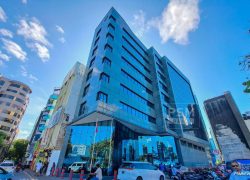

The Maldives has built one of South Asia’s highest per capita income economies through the combined strength of tourism, infrastructure development and sustained public investment, creating a growth story that continues to attract international attention. Over the years, the country has expanded airports across the atolls, reshaped Greater Malé through major housing developments, and laid the foundation for broader economic transformation through Special Economic Zones aimed at supporting diversification. As the nation looks to the future, however, the next phase of development is increasingly defined not only by ambition, but by how effectively growth is managed within the structural realities of a small island economy.
With a population of just over half a million, the Maldives operates within a domestic market that is naturally limited in scale. This means that sectors such as retail, banking, telecommunications and property can only expand so far before demand begins to level off. In practical terms, this creates a business environment where duplicated capacity, stronger price competition and softer returns on investment can emerge more quickly than in larger economies. This is not a sign of weakness, but a reminder that the Maldivian economy follows a different logic, one in which success depends less on size and more on precision, efficiency and high-value market positioning.
Within that economic structure, tourism remains the country’s most important engine of scale and international competitiveness. It expands the market in a way no domestic sector can by bringing global demand directly into the country. Every visitor adds purchasing power to the economy, supports employment, generates foreign exchange and creates business opportunities that would otherwise be difficult to sustain in a small population base. For the Maldives, this has made tourism not only a leading sector, but a foundational one. It has enabled the country to build a modern services economy, support public revenues and maintain international visibility far beyond what its physical size might suggest.
The resort sector sits at the heart of this success and continues to play a central role in shaping the Maldives’ economic future. Maldivian resorts have helped position the country as one of the world’s most distinctive high-end travel destinations, offering experiences that combine exclusivity, natural beauty, environmental appeal and premium hospitality. Beyond visitor arrivals alone, resorts contribute deeply to the wider economy through supply chains, transport services, construction demand, food and beverage sourcing, marine services, wellness offerings and related tourism-linked investments. They also create international brand value for the Maldives, strengthening the country’s ability to compete globally in a travel market where differentiation is essential.
At the same time, the Maldives’ continued reliance on tourism also highlights the importance of resilience. Because tourism imports demand from abroad, it allows the economy to function at a scale that would not otherwise be possible. Yet this also means that global disruptions can have an immediate impact. When international travel slows, the effects are quickly felt across revenues, foreign exchange earnings and investor confidence. Even areas that appear diversified within the domestic economy often remain indirectly linked to tourism performance. This makes the quality, productivity and adaptability of the tourism sector especially important, particularly in the resort segment, where value capture can be increased not only by adding new properties, but by improving service levels, targeting higher-value markets, deepening guest experiences and strengthening sustainability standards.
This is why the national conversation on diversification is becoming more focused on competitiveness rather than diversification for its own sake. For other sectors to complement tourism meaningfully, they must also generate foreign exchange and operate successfully in international markets. Achieving this is not simple in the Maldivian context. The country faces high transport costs due to geography, production challenges linked to limited scale, and additional pressure from energy and logistics constraints. These structural realities help explain why many diversification efforts face difficulties. The challenge is not a lack of vision or commitment, but the need to build sectors that can overcome cost disadvantages while delivering specialised value to global markets.
Labour market realities add another important layer to this picture. The Maldivian workforce is relatively small, and the skills needed for high-value sectors are still developing in certain areas. As a result, growth in industries such as tourism and construction continues to rely significantly on expatriate labour. This has enabled rapid expansion and helped support the pace of development across the country. At the same time, it means that part of the income generated within the economy flows outward through remittances, reducing the share of value that remains locally. In parallel, youth unemployment reflects a different concern: not necessarily a shortage of jobs, but a mismatch between education outcomes and labour market needs. Addressing this gap will be essential if the Maldives is to strengthen productivity, improve domestic participation in higher-value employment and reduce long-term dependence on imported labour.
Institutional capacity also plays a critical role in shaping how far and how fast growth can proceed. Major infrastructure initiatives, regulatory reforms and economic planning all require specialised expertise, coordinated implementation and strong oversight. In a small system, these capabilities cannot be expanded without limits or developed overnight. When multiple large-scale projects are advanced at the same time, pressures on execution naturally increase, often contributing to delays, cost overruns or coordination challenges. These are not unusual issues in development, but in the Maldivian context they reflect the broader absorptive limits that come with scale. Recognising those limits can support better sequencing, stronger governance and more durable outcomes.
Public finance reveals a similar structural pattern. Government revenue remains closely tied to tourism activity, while key expenditure obligations, especially debt servicing, remain fixed regardless of external conditions. This creates a clear imbalance. During periods of strong tourism performance, growth and public spending can move forward with confidence. During downturns, however, fiscal adjustment becomes more difficult because the revenue base is externally driven. For this reason, economic resilience in the Maldives depends not only on generating growth, but also on building stronger fiscal buffers, improving public sector efficiency and managing development in a way that preserves stability through changing global cycles.
Taken together, these realities point to an important strategic conclusion: the Maldives’ future growth will not come primarily from simply expanding physical infrastructure or applying models designed for much larger economies. In a small island state, scale cannot be created through population size alone. It must be built through efficiency, specialisation and stronger value capture. This opens a promising path for the country, particularly in sectors where success is not determined by domestic market volume. High-value services, niche exports and digitally enabled industries offer space for carefully targeted expansion, especially when supported by strong institutions and a well-prepared workforce.
For tourism and the resort industry, this means that the next stage of progress may depend more on raising productivity and value than on expansion alone. The Maldives is already globally recognised for its luxury hospitality offering, and that position creates room for continued gains through innovation, sustainability leadership, premium service design, wellness and experiential travel, marine conservation integration and digital enhancements that improve both operations and guest engagement. By strengthening what existing resorts contribute to the wider economy, the country can increase returns from tourism while also making the sector more resilient and more deeply connected to national development priorities.
The Maldives has already shown that a small island economy can reach high-income status while operating within clear structural limits. That achievement remains one of the country’s strongest messages to international observers and investors. The next chapter is more sophisticated and potentially even more important. It is about making growth smarter, improving resilience, investing in human capital and focusing on sectors where the Maldives can compete through excellence rather than size. With tourism continuing to provide a strong foundation, and with the resort sector remaining central to that success, the country is well positioned to pursue a development path that is strategic, sustainable and globally relevant.
 advertisment



 advertisment