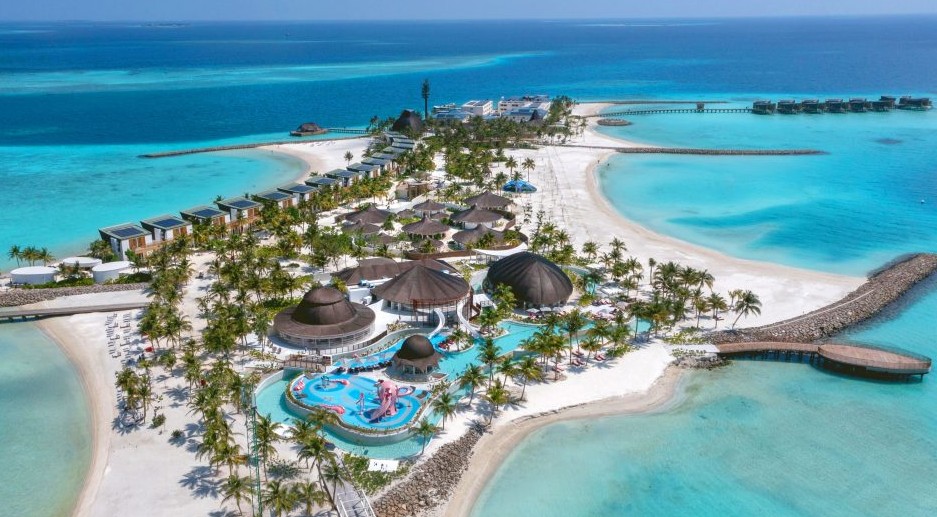

As one of the world’s most celebrated island destinations, the Maldives depends on the careful protection of its natural environment, with water standing at the centre of both daily life and long-term sustainability. In a setting defined by turquoise lagoons, fragile marine ecosystems and low-lying islands, responsible water management is essential not only for resort operations but also for preserving the environmental integrity that makes the Maldives so distinctive to travellers from around the world. Reflecting this reality, Centara’s resorts in the Maldives are continuing to advance comprehensive water conservation practices across their properties, combining innovation, operational excellence, staff engagement and guest awareness to deliver measurable progress in sustainable hospitality.
Across Machchafushi Island Resort & Spa by The Centara Collection, Centara Ras Fushi Resort & Spa, and The Atollia, which comprises Centara Grand Lagoon Maldives and Centara Mirage Lagoon Maldives, water stewardship has become an integral part of daily operations and long-term environmental strategy. The coordinated efforts across these four resorts reflect a clear commitment to reducing water consumption, improving efficiency and supporting the broader sustainability of the island ecosystems in which they operate. By introducing practical technologies, enhancing monitoring systems and encouraging both team members and guests to participate in conservation, Centara’s Maldives portfolio is demonstrating how premium resort experiences can be aligned with responsible resource management.
At Machchafushi Island Resort & Spa, water conservation is embedded in the management of both guest-facing spaces and back-of-house operations. The resort carefully monitors water use across its accommodation areas and operational outlets, working toward a target of reducing consumption by 10 per cent per guest night. This target is benchmarked against 1,150 litres per head per night, with daily water usage tracking helping the resort measure performance and refine its approach. The property has introduced low-flow faucets and showerheads to reduce unnecessary consumption without affecting guest comfort, while rainwater harvesting systems are being used to support garden irrigation. In addition, wastewater recycled through the sewage treatment plant is used for irrigation purposes, helping to reduce pressure on freshwater resources and reinforcing a circular approach to utility management.
The resort’s conservation strategy is also supported by disciplined operational practices. Staff regularly carry out plumbing audits to detect and address leaks early, helping to ensure that water losses are minimised across the island. Laundry operations have also been optimised, particularly during periods of low occupancy, allowing the property to better align utility consumption with operational demand. Recognising that sustainability is most effective when it involves everyone on the island, Machchafushi Island Resort & Spa also encourages guests to take part through its My Green Day programme, under which visitors are invited to reuse towels and bed linens. This initiative is further supported by spa incentives, creating a positive and engaging way for guests to contribute to conservation during their stay. With total island consumption covering both guest areas and team member accommodation, the resort’s careful management of plumbing, irrigation and laundry systems is helping ensure that every drop is used with purpose and efficiency.
At Centara Ras Fushi Resort & Spa, water conservation is similarly integrated into every layer of resort operations, reflecting a practical and performance-focused approach to sustainability. The property has installed dual-flush cisterns in all guest and staff accommodation, with cistern water levels optimised from nine litres to seven litres to reduce unnecessary use while maintaining functionality. Showers and faucets are fitted with water saver strainers to lower flow rates, and the resort also carefully adjusts booster pump pressure in response to occupancy levels, operating at 2.4 bar during high occupancy and 2.2 bar during low occupancy. This precise management allows the property to balance resource efficiency with service quality, ensuring that guest comfort remains uninterrupted.
Further strengthening its conservation framework, Centara Ras Fushi Resort & Spa also replenishes its pool balancing tanks with 2,000 to 3,000 litres of seawater once a week, reducing dependence on freshwater in areas where suitable alternatives are available. These measures are supported by close monitoring of water line pressures and hot water distribution, creating a system in which engineering efficiency directly supports environmental performance. The outcome has been a meaningful reduction in overall water consumption, while preserving the seamless guest experience expected at a premium Maldivian resort. The property’s work illustrates how technical optimisation, when managed consistently and intelligently, can make a significant contribution to sustainability in island hospitality.
Commenting on these efforts, Francesco Pompilio, Cluster General Manager of Machchafushi Island Resort & Spa and Centara Ras Fushi Resort & Spa, said responsible water management remains central to the group’s strategy for sustainable operations and long-term water stewardship. He noted that through ongoing initiatives, innovative technology, operational efficiency and guest engagement, the resorts are taking a strategic approach to conserving and protecting this vital resource, adding that every drop saved reinforces their commitment to effective water management and sustainability.
At The Atollia by Centara Hotels & Resorts, which encompasses Centara Grand Lagoon Maldives and Centara Mirage Lagoon Maldives, water sustainability is being advanced through large-scale infrastructure, detailed monitoring and a strong culture of accountability. The two resorts operate three desalination plants with a combined production capacity of 900 cubic metres per day, drawing water from the deep sea with a 40 per cent recovery rate. This system provides a reliable source of water while supporting careful management of island resources, demonstrating how modern engineering can help sustain resort communities in remote ocean environments.
The results recorded so far in 2026 highlight the strength of this approach. Year-to-date water consumption stands at 324 litres per head at Centara Mirage Lagoon Maldives and 359 litres per head at Centara Grand Lagoon Maldives. These figures represent total island consumption, including both guest facilities and team member accommodation, and remain substantially below the benchmark target of 1,000 litres per head. Such performance reflects not only the effectiveness of the infrastructure in place but also the consistency of day-to-day management, maintenance and staff involvement across both resorts.
At The Atollia, hourly water meter readings and sensor-based flow monitoring provide continuous visibility over consumption patterns, enabling teams to respond quickly, identify inefficiencies and maintain close control over resource use. Greywater is used exclusively for irrigation, while the sewage treatment plant is maintained to a high standard to ensure reliable performance and environmental protection. Staff members receive regular training in water conservation practices, helping to embed sustainability into operational culture and ensuring that resource stewardship remains a shared responsibility across departments. Preventive maintenance schedules are followed closely, and all sanitary fittings are selected for high efficiency as well as water safety and performance.
Guest and staff areas at Centara Grand Lagoon Maldives and Centara Mirage Lagoon Maldives are also equipped with sensor-operated taps, dual-flush toilets and faucet aerators, while clear sustainability signage helps reinforce awareness and encourage responsible use. These measures contribute to a resort environment where conservation is visible, practical and integrated into the guest journey without compromising comfort or quality. The result is a model of island hospitality that combines premium experiences with a strong environmental ethic, offering travellers the opportunity to enjoy the Maldives while knowing that responsible systems are in place behind the scenes to protect its most essential resources.
Jorge Fernandez, Cluster General Manager of Centara Grand Lagoon Maldives and Centara Mirage Lagoon Maldives, said the group’s approach to water sustainability extends beyond reducing consumption and is focused on creating measurable impact while fostering a culture of stewardship. He said that through innovative technology, continuous staff training and rigorous operational management, the resorts are ensuring that each initiative contributes to the responsible use of water while supporting the long-term sustainability of the properties and the guest experiences they provide.
Across all four Centara Hotels & Resorts properties in the Maldives, water stewardship continues to be treated as an ongoing priority rather than a one-time initiative. Through coordinated efforts that combine innovation, operational discipline, staff training and guest participation, each resort is actively reducing consumption, optimising efficiency and promoting a more sustainable approach to island hospitality. In a destination where environmental care is inseparable from tourism success, Centara’s resorts are showing how meaningful conservation can be built into everyday operations and elevated into a defining part of the guest experience. Their continued focus on responsible water use not only supports the protection of the Maldives’ delicate ecosystems but also strengthens the long-term resilience and appeal of the destination for global travellers.
 advertisment



 advertisment