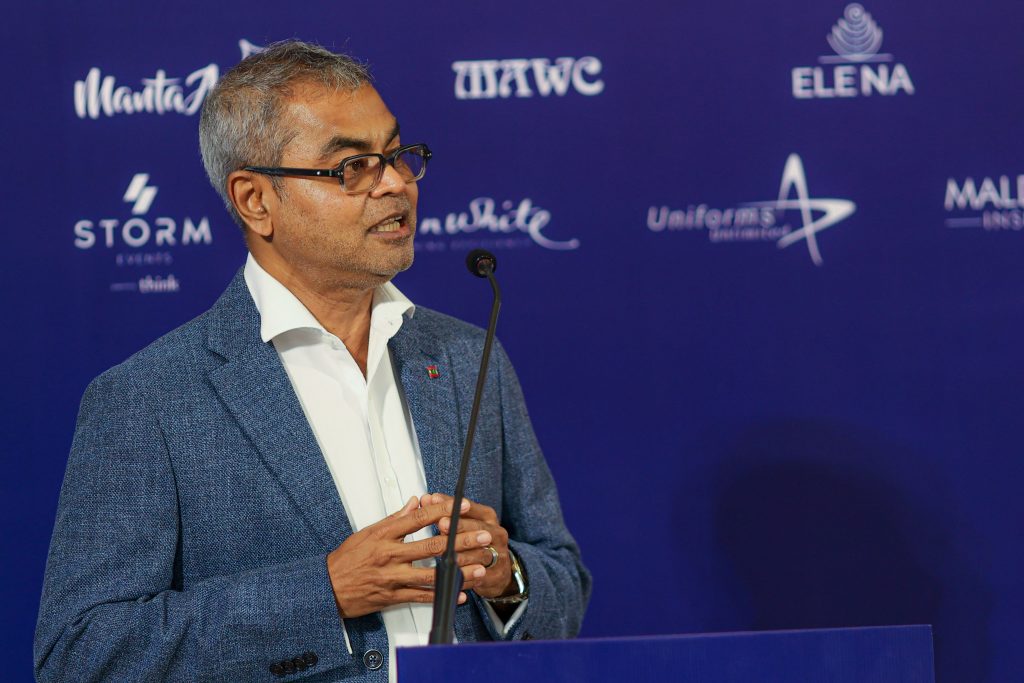

The Maldivian government is preparing targeted marketing campaigns in major tourism source markets as it works to minimise the potential impact of the ongoing war in the Middle East on visitor arrivals and maintain confidence in the country’s tourism industry. The strategy was outlined by Tourism and Environment Minister Thoriq Ibrahim during a press conference held by a Special Cabinet Committee established by the President to assess the possible economic implications of the conflict. The committee has been tasked with closely monitoring developments in the region and coordinating timely measures to address any disruption to key sectors of the national economy, with tourism remaining at the centre of these efforts.
According to the Minister, information shared by stakeholders across the tourism industry shows that the majority of booking cancellations recorded so far are linked to travel planned for March and April. While this has raised concerns about short-term fluctuations in arrivals, current booking trends indicate that demand remains comparatively stable for travel periods beyond April. This has provided a degree of reassurance for the sector and supports expectations that the Maldives will continue to attract strong interest from international travellers in the months ahead, particularly as the destination retains its position as one of the world’s most sought-after luxury island getaways.
Industry discussions have therefore focused on practical steps to manage the softer booking environment expected during these two months while protecting the longer-term value of the destination. Resorts have been playing an important role in these efforts by offering flexible rebooking arrangements that allow guests to postpone their holidays without additional charges. This approach has helped preserve customer confidence and encouraged many travellers to defer their visits rather than cancel their trips entirely. For resort operators, such flexibility is also helping to safeguard forward bookings, maintain relationships with travel partners and reduce the immediate commercial pressure that can arise during periods of external uncertainty.
The government’s planned promotional response will place particular emphasis on countries that contribute significantly to tourist arrivals to the Maldives, with India, China and Russia identified as priority markets. These campaigns are expected to be carried out in collaboration with Maldivian embassies in key destinations, enabling a more coordinated and market-focused effort to sustain visibility, strengthen traveller reassurance and support booking momentum. Such engagement is likely to be especially important at a time when global travel decisions are being influenced not only by destination appeal, but also by route convenience, airline operations and overall travel confidence.
The latest measures reflect the Maldives’ broader commitment to protecting the resilience of its tourism industry, which remains the country’s most important economic driver and a major contributor to employment, foreign exchange earnings and investment activity. The Middle East conflict, which began on February 28, has affected regional air connectivity through airspace closures in parts of the area, disrupting flight paths that serve as major transit corridors for passengers travelling to the Maldives. Despite these operational challenges, authorities and industry leaders appear focused on ensuring that the Maldives remains accessible, competitive and attractive to global travellers through proactive marketing, flexible resort policies and close coordination between the public and private sectors.
For international audiences, the response underscores the Maldives’ ability to adapt quickly to external developments while maintaining a strong focus on service standards and destination confidence. The country’s resort sector continues to demonstrate agility in managing changing travel patterns, and the government’s planned campaigns are expected to reinforce the Maldives’ standing in global tourism markets. With demand beyond April showing encouraging signs, the current outlook suggests that while short-term pressures may require careful management, the fundamentals of the Maldivian tourism industry remain strong and well-positioned for continued recovery and growth.
 advertisment



 advertisment