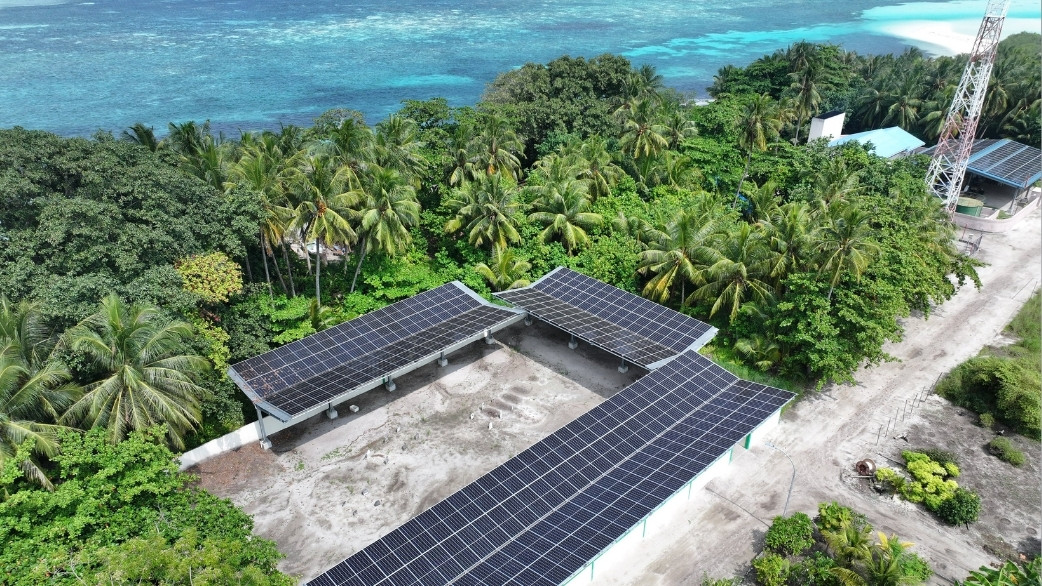

Work is underway to establish a solar-diesel battery hybrid power system in Fehendhoo, the Ministry of Tourism and Environment has announced, marking steady progress in the island’s transition toward cleaner and more resilient energy infrastructure. The initiative is designed to enhance the reliability of electricity services for households and public facilities, reinforce overall grid stability, and reduce reliance on diesel-based generation, which remains a major cost driver for many island communities. As installation continues, the ministry said new infrastructure is being put in place to increase the share of renewable energy used in Fehendhoo, supporting more consistent power delivery while managing fuel expenses more effectively.
Under the project, Fehendhoo will be equipped with a 250-kilowatt solar photovoltaic system paired with a 537-kilowatt battery energy storage system, creating a hybrid setup that can better balance generation and demand throughout the day. The integration of battery storage is expected to help maximise the use of solar energy by storing excess production and supplying it when sunlight is limited, reducing the need to run diesel generators as frequently. Once fully operational, the hybrid system is expected to provide greater flexibility in how electricity is generated and dispatched, helping to stabilise voltage and frequency while supporting smoother operations across the local grid.
The Ministry of Tourism and Environment estimates the project will deliver significant efficiency gains, including annual fuel savings of about 117,697 litres of diesel, reflecting a meaningful reduction in ongoing generation costs. From an environmental perspective, the shift away from diesel is expected to lower carbon dioxide emissions by approximately 288 tonnes per year, aligning Fehendhoo’s energy supply with wider sustainability objectives and global climate priorities. The ministry added that diesel consumption for electricity generation on the island is expected to decline once installation work is completed and the system becomes fully operational, reinforcing the project’s role within broader national efforts to expand renewable energy adoption, manage fuel costs, and reduce environmental impact across the Maldives.
 advertisment




 advertisment