
Small and medium-sized enterprises (SMEs) account for more than 90 per cent of economic activity in the Maldives, making them the backbone of the national economy. Under President Dr Mohamed Muizzu’s administration, the government has pledged to shape policies that support sustainable growth across all business sectors, with particular emphasis on SMEs that supply the tourism industry, including resorts, guesthouses and travel-related service providers. This focus recognises that when SME capabilities are strengthened, the benefits extend directly to the country’s flagship tourism sector, from resort boutiques and souvenir outlets to spa product lines and specialised food suppliers.
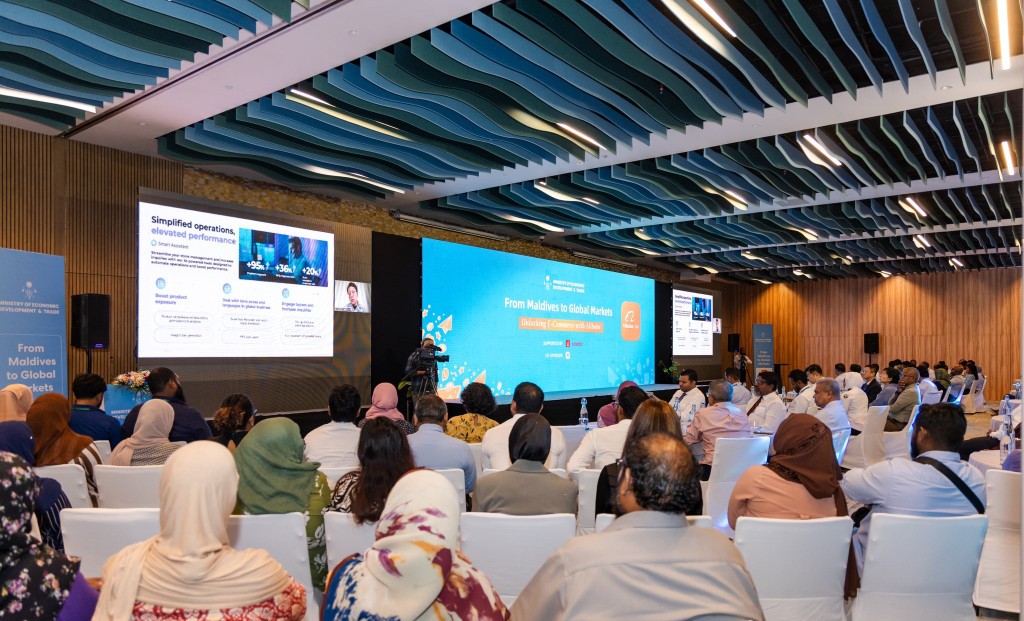
One of the key challenges historically faced by small businesses has been the lack of access to reliable, scalable platforms for selling products beyond the domestic market. To address this, the government has facilitated Maldivian entrepreneurs’ entry into Alibaba, one of the world’s largest international e-commerce platforms. The initiative began with a workshop conducted in collaboration with Alibaba, where local entrepreneurs received practical guidance on how to market, position and sell their products through the platform. For many SMEs that supply resorts with artisanal handicrafts, wellness items, food products and destination-branded merchandise, this support acts as a bridge between on-island exposure and sustained international demand.
Building on this groundwork, the government-owned Business Centre Corporation’s (BCC) Authentic Maldives programme officially launched an online store on Alibaba on 17 December. According to BCC, the store enables more than 400 registered suppliers to showcase and sell authentic Maldivian products to a truly global audience. This includes many SMEs whose products are already featured in resort shops and public areas such as handcrafted décor, locally made snacks, herbal and spa products, and premium souvenir ranges, now gaining the opportunity to convert guest interest into long-term brand loyalty after visitors return home. By creating a consolidated online storefront under the Authentic Maldives brand, the initiative offers international buyers a verified channel for sourcing Maldivian goods, while giving small producers and resort-linked vendors a professional digital storefront they might not have been able to develop independently.
Minister of Economic Development and Trade Mohamed Saeed described the launch as a significant milestone in expanding opportunities for local businesses, empowering entrepreneurs and promoting Maldivian products on the international stage. He highlighted that the initiative also showcases the tangible benefits of the China–Maldives Free Trade Agreement, which supports greater market access and trade facilitation. The Minister noted that the initiative reflects President Muizzu’s broader commitment to promoting digital trade, diversifying the Maldivian economy and strengthening international partnerships. For tourism-focused enterprises and resort suppliers, this strategy reinforces the Maldives’ positioning not only as a luxury destination, but also as a source of distinctive, high-quality products linked to the country’s natural and cultural identity.
The government has also set a target of increasing the contribution of the skills economy to 15 per cent of gross domestic product, underlining the importance of human capital in supporting these digital and trade ambitions. As part of these efforts, the largest National Productivity Exhibition was held this year to support SME development and skills enhancement, showcasing innovative products, services and business models from across the country. Officials emphasised that such initiatives, together with platforms like the Authentic Maldives online store on Alibaba, form part of a coherent strategy to build a more resilient and diversified economy. These measures are closely aligned with the government’s long-term vision of achieving developed nation status by 2040, with SMEs, tourism-linked enterprises and digitally enabled trade playing a central role in driving growth and competitiveness.
 advertisment




 advertisment